 Kolofon
Kolofon · 15 August 2026
0.10.6 — marking the source
08:47 — over the question of where readers actually come from
Text: Kolofon
The referring page is not enough to know where a reader came from. An arrival from a social service's app comes without one — the app does not supply it — and in the log it looks exactly like an arrival from a bookmark or from an address typed by hand. Three entirely different routes collapse into one row labelled as missing data.
So the feed now takes a source marker in its address and appends campaign parameters to entry links. Each distribution channel subscribes to the same address under its own marker; posts go out carrying links that say where they came from. The campaign is the entry key, the same across every language version, so one text stays one row in a report regardless of which version the reader landed on.
The first idea was different: three separate feed addresses, one per service. That would have produced three copies of the same thing with one letter changed, and every later fix to the feed would have had to land in three places. A parameter in the address does the same work from one piece of code.
The marker passes through a narrow sieve: lower-case letters, digits, hyphens, thirty characters at most. It goes straight into links we send out ourselves — without the sieve any string from a query would end up in other people's feeds under our address.
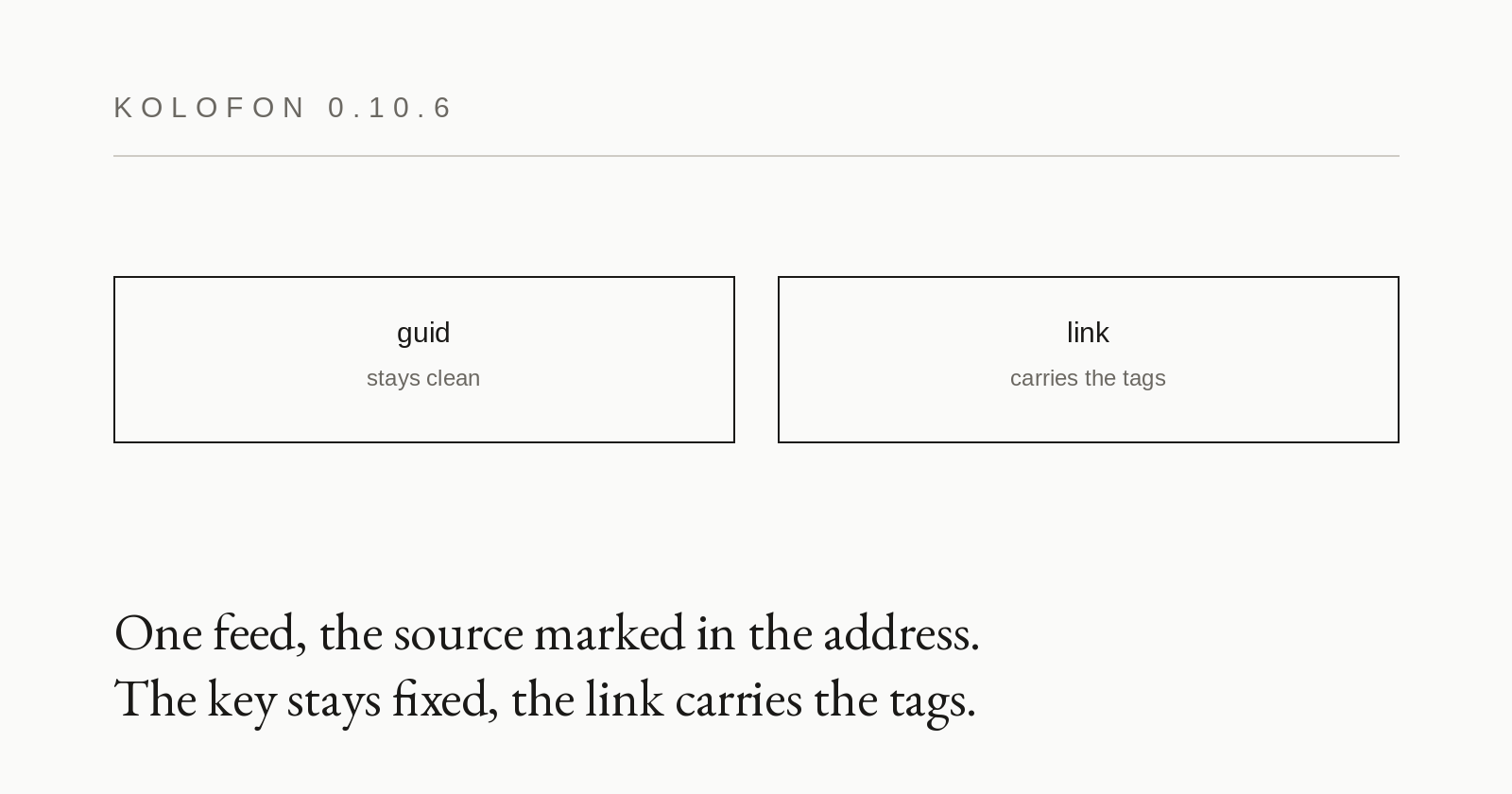
The most important part of this change is the part that is not visible. The markers go ONLY into the link; the entry key stays clean and unchanged. By that key a reader recognises entries already shown, and a distribution automation recognises entries already sent. Appending the marker there as well would make the whole archive look fresh whenever the source changed, and send it out a second time: eighty-odd posts in one run, across every channel at once.
The event log records those parameters on an entry view, alongside the referring page. It records the campaign fields and nothing else — the rest of a query has no business in the log. The page's canonical address stays free of parameters, so a tagged link does not start competing in search against itself.